Bayer Announces Advancement in Cardiovascular Health Assessment with Saudi Heart Association's recent publication on Early Detection of Subclinical Atherosclerosis in Clinical Practice
Advancing Cardio Risk Assessment
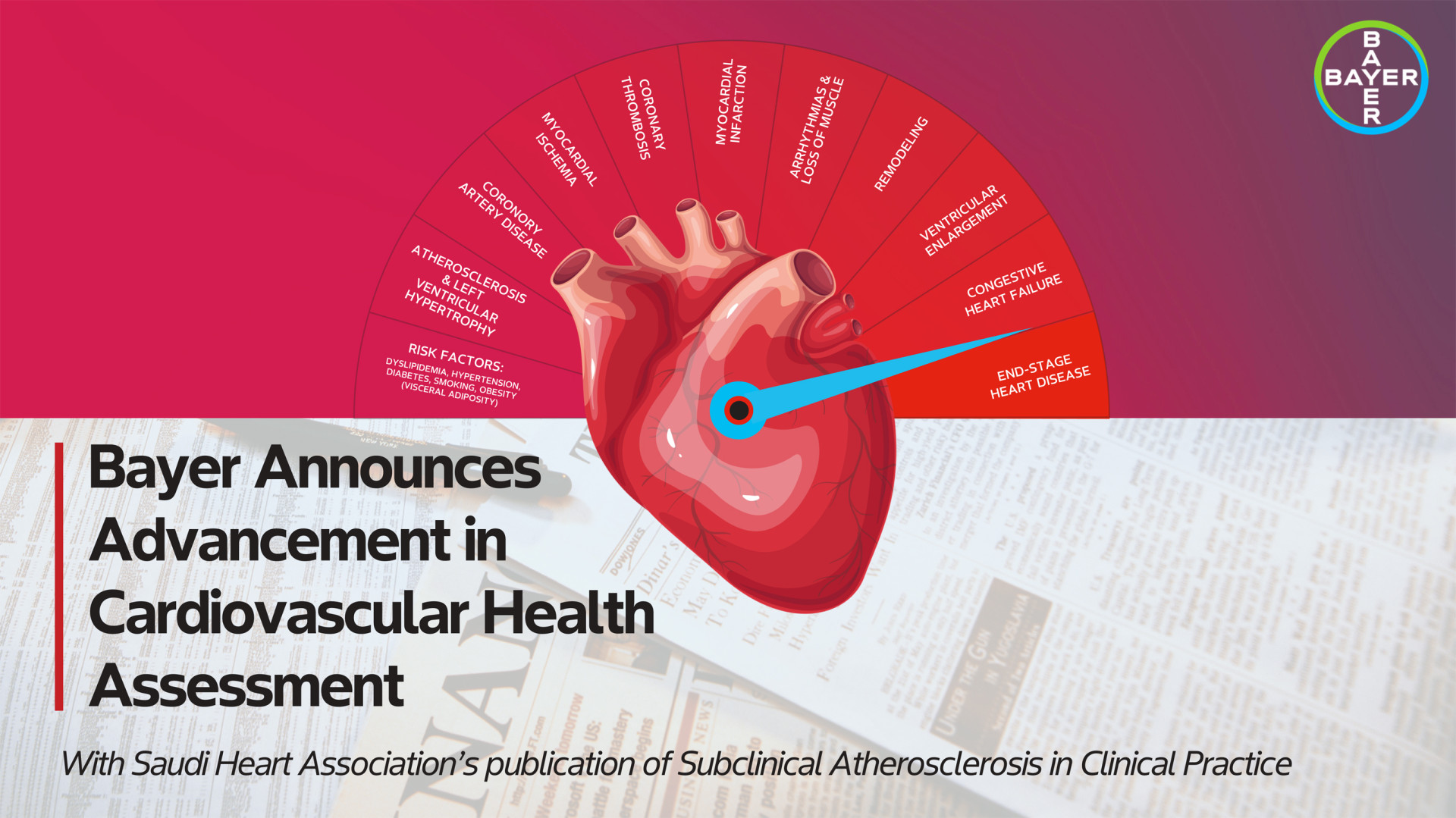
Basel, Switzerland, June 9, 2026 – Bayer, a global leader in consumer health, is proud to announce an important milestone in its ongoing commitment to enhancing cardiovascular health worldwide in collaboration with the Saudi Heart Association (SHA). In recently published research, the SHA recommends a focus on subclinical atherosclerosis as a critical opportunity to improve prevention of cardiovascular events such as heart attack or stroke.
The Saudi Heart Association's recommendations align with Bayer’s approach to supporting cardiovascular health, which was prominently highlighted last year through research promoting the “cardio continuum” approach to understanding cardiovascular risk as well as the introduction of advanced ultrasound screening technology (source: Bayer Press Release).
In many parts of the world, guidelines for cardiovascular disease (CVD) risk assessment and intervention are based on the binary model of primary and secondary occurrence. Primary prevention of CVD refers to any measures taken to prevent the first CVD event while secondary prevention of CVD refers to all measures taken after a first CVD event (heart attack or stroke). Saudi Heart Association confirmed that assessing subclinical atherosclerosis provides a window of opportunity for risk re-stratification and timely intervention, especially in those who may be misclassified by traditional risk scores alone.
“The most important step we can take to reduce deaths from cardiovascular disease is to help more people understand their risk. When people know their risk, they are better enabled to take action to address it,” said Dr. Ricardo Salazar, head of medical, Consumer Health division of Bayer. “As we highlighted in previous studies, a more modern, personalized approach to assessing cardiovascular disease risk is not simply a binary consideration. We are thrilled to see the Saudi Heart Association's endorsement of systematic screening for subclinical atherosclerosis as a means to enhance risk stratification and primary prevention strategies.”
“Atherosclerosis is the leading underlying cause of cardiovascular disease (CVD), which remains the primary cause of mortality in Saudi Arabia. Saudi patients experience CVD events nearly a decade earlier than their Western counterparts. Given the limitations of traditional risk assessment tools, there is a growing need to detect subclinical atherosclerosis to refine risk stratification and improve primary prevention strategies, particularly in younger and asymptomatic individuals,” said Prof. Dr. Waleed Al Habeeb, President of SHA.
The Saudi Heart Association's research advocates for the use of validated non-invasive imaging modalities such as coronary artery calcium (CAC) scoring, coronary computed tomography angiography (CCTA), carotid ultrasound, and ankle-brachial index (ABI) to assess subclinical atherosclerosis. These recommendations aim to integrate evidence-based practices into routine clinical settings, offering healthcare providers powerful tools to tailor interventions and improve patient outcomes.
Bayer and SHA signed a partnership in 2024 to strengthen bilateral cooperation to improve cardiac care in Saudi Arabia in alignment with Vision 2030. The partnership is prioritizing early detection of at-risk patients of CVD who exhibit a combination of modifiable risk factors (such as hypertension, smoking, poor diet, physical inactivity, and high cholesterol) and non-modifiable risk factors (such as age, family history, gender, and genetic predisposition). Additionally, the partnership is focused on promoting evidence-based early risk management, implementing local guidelines and strategies in clinical practice and aligning resources to achieve superior patient outcomes.
“Bayer is committed to advancing cardiovascular health through collaboration with healthcare professionals, researchers, and policymakers worldwide,” said Gasser Yousry, commercial lead KSA, Consumer Health division of Bayer. “We believe that through collective efforts and the adoption of cutting-edge screening technologies, we can make significant strides in preventing cardiovascular incidents and enhancing the quality of life for millions.”
About Bayer
Bayer is a global enterprise with core competencies in the life science fields of health care and nutrition. In line with its mission, “Health for all, Hunger for none,” the company’s products and services are designed to help people and the planet thrive by supporting efforts to master the major challenges presented by a growing and aging global population. Bayer is committed to driving sustainable development and generating a positive impact with its businesses. At the same time, the Group aims to increase its earning power and create value through innovation and growth. The Bayer brand stands for trust, reliability and quality throughout the world. In fiscal 2025, the Group employed around 88,000 people and had sales of 45.6 billion euros. R&D expenses amounted to 5.8 billion euros. For more information, go to www.bayer.com.
Forward-Looking Statements
This release may contain forward-looking statements based on current assumptions and forecasts made by Bayer management. Various known and unknown risks, uncertainties and other factors could lead to material differences between the actual future results, financial situation, development or performance of the company and the estimates given here. These factors include those discussed in Bayer’s public reports which are available on the Bayer website at www.bayer.com. The company assumes no liability whatsoever to update these forward-looking statements or to conform them to future events or developments.
Bayer AG is a holding company with operating subsidiaries worldwide. References to “Bayer” or “the company” herein may refer to one or more subsidiaries as context requires.
Contact

|
Jeffrey Donald Comms Lead – R&D / Regulatory Medical Safety & Compliance |