
How Boston-Cambridge Is Powering Bayer’s Health Innovation
Following Axios Live’s Boston’s Next Health Breakthroughs event, Bayer highlights why Boston-Cambridge matters for health innovation, how its Kendall Square presence supports collaboration, and how trusted science in precision oncology, cell and gene therapy and AI-enabled discovery can help advance patient impact.
Key Takeaways
Why does Boston-Cambridge matter to Bayer’s health innovation strategy? Boston-Cambridge brings together scientific talent, hospitals, biotechnology companies, investors and research institutions, creating an ecosystem where Bayer can collaborate to advance trusted science in areas of significant unmet medical need.
How is Bayer connecting innovation to patient impact? Through its Kendall Square Research and Innovation Center, Bayer Co.Lab Cambridge and work across precision oncology, cell and gene therapy and AI-enabled discovery, Bayer is helping move rigorous research and collaborative innovation closer to patients.

At Axios Live’s Boston’s Next Health Breakthroughs event, Bayer shared key messages on what Bayer is doing in Boston-Cambridge, why the region matters for health innovation, and how trusted science in precision oncology, cell and gene therapy and AI-enabled discovery can help move scientific discovery closer to patients.
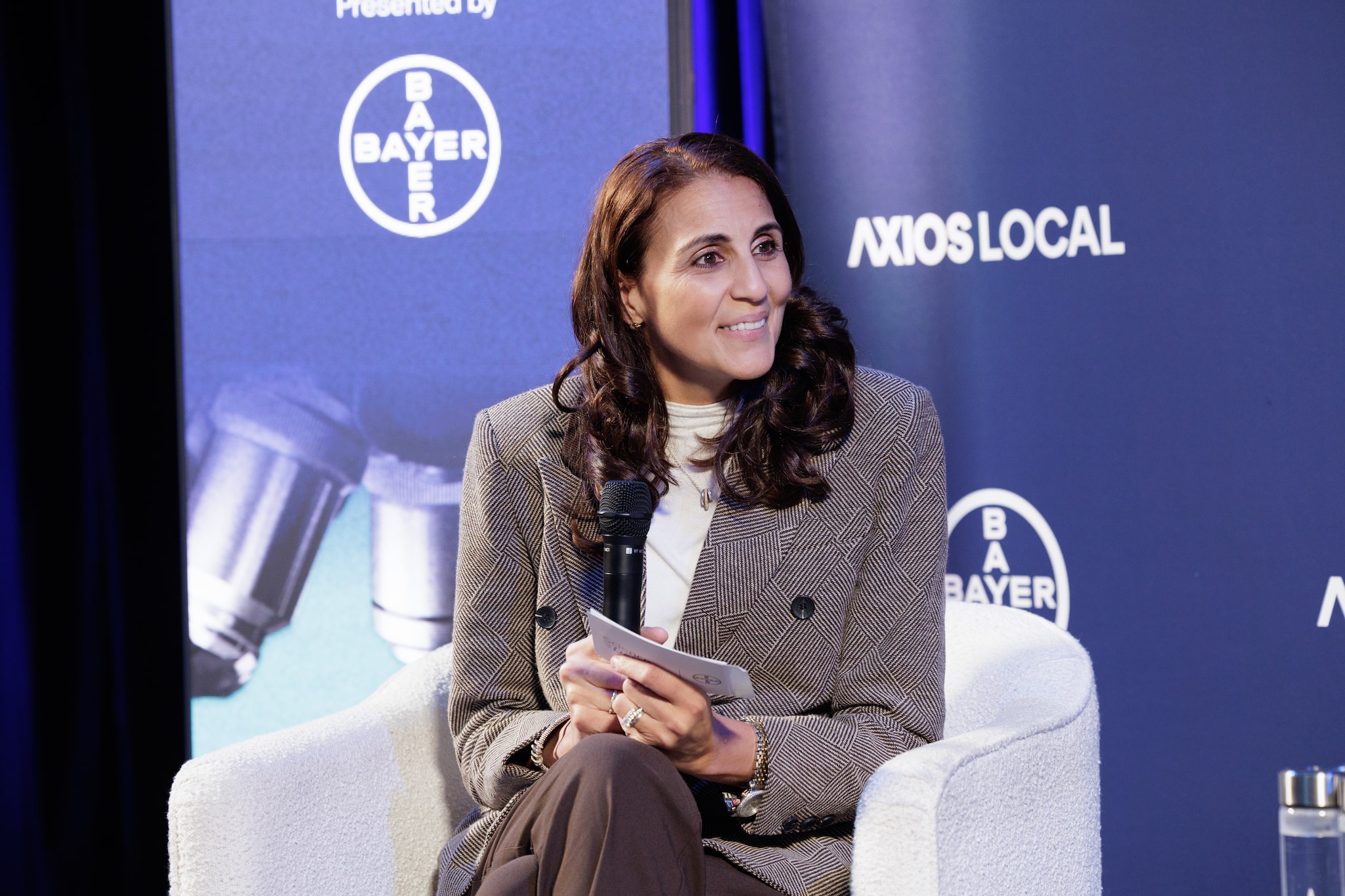
During a fireside conversation with Hope King, senior correspondent and author at Axios, Yesmean Wahdan, MD, Senior Vice President and Head of U.S. and North America Medical Affairs for Bayer Pharmaceuticals, described how the region’s concentration of scientific talent, hospitals, biotechnology companies and research institutions creates an environment where rigorous science and collaboration can move ideas closer to patients. For Bayer, that presence includes a $140 million Research and Innovation Center in Kendall Square, Bayer Co.Lab Cambridge and connections to advanced therapeutic platforms and research collaborations focused on areas including precision oncology, cell and gene therapy, cardiovascular disease, renal disease and AI-enabled discovery.
Why Health Innovation Matters for Patients
The need for innovation has never been greater. Today, millions of people are living with serious diseases that continue to present significant challenges for patients, families and healthcare systems.
According to the Parkinson's Foundation, more than 1.1 million people in the United States are living with Parkinson's disease, and that number is expected to continue growing. Meanwhile, the American Heart Association projects that more than 184 million Americans could be living with some form of cardiovascular disease by 2050, underscoring the need for continued advances in prevention, diagnosis and treatment. [parkinson.org], [newsroom.heart.org]
Against that backdrop, conversations about scientific innovation are ultimately about people.
"Patients cannot wait," said Wahdan. "Every advance in science represents an opportunity to improve outcomes, expand treatment options and create hope where unmet medical needs remain."
Why Boston-Cambridge Matters for Health Innovation
Boston-Cambridge is often recognized for its concentration of research institutions, hospitals, biotechnology companies, investors and entrepreneurs. But during the discussion, Wahdan emphasized that the region's strength extends beyond its infrastructure.
Drawing on her experience as a Medical Science Liaison covering New England earlier in her career, she described a culture grounded in scientific excellence, humility, determination and collaboration. Rather than accepting conventional thinking, researchers and clinicians throughout the region continually challenge assumptions, follow evidence and work across disciplines to move ideas closer to patients.
This culture of inquiry has helped make Boston-Cambridge one of the world's most influential life sciences ecosystems, attracting talent, investment and partnerships that accelerate innovation. "Breakthroughs happen where people challenge ideas, follow the evidence and collaborate. Boston brings that mindset together with the scientific excellence and ecosystem needed to help change what is possible for patients."
Suggested quote based on approved message territory; speaker approval required.
What Bayer Is Doing in Boston-Cambridge
Bayer’s presence in Boston-Cambridge reflects a focused commitment to investing where scientific opportunity, collaboration and patient need intersect.
A key part of that commitment is Bayer’s $140 million Research and Innovation Center in Kendall Square, a 62,100-square-foot facility established to advance precision molecular oncology research and the development of novel targeted cancer therapies for patients with unmet medical need. Located in one of the world’s leading biotechnology ecosystems, the center is designed to strengthen collaboration among Bayer scientists, academic researchers, hospitals and industry partners across the Boston-Cambridge region. [bayer.com]
Bayer has also expanded its regional innovation network through Bayer Co.Lab Cambridge, a life sciences incubator co-located with Bayer’s research operations in Kendall Square. Co.Lab provides early-stage companies with access to laboratory space, mentorship and Bayer scientific expertise, with a focus on cutting-edge technologies in oncology, cardiovascular disease, renal disease and immunology, and a particular emphasis on cell and gene therapies for central nervous system and rare diseases. [colab.bayer.com], [bayer.com]
Together, these investments help Bayer connect internal research, start-up innovation and external scientific partnerships in a region known for translating discovery into potential medical advances.
Bayer’s Role in Precision Oncology, Cell and Gene Therapy and AI-Enabled Discovery
Bayer’s work in the Boston-Cambridge ecosystem spans several areas shaping the future of healthcare and answering urgent patient needs.
These include:
- Cell and gene therapy, supported through Bayer companies such as BlueRock Therapeutics and AskBio, is exploring next-generation approaches that may one day address diseases where current treatment options remain limited, including neurological, cardiovascular and rare diseases.
- Precision oncology focuses on understanding the molecular drivers of cancer so researchers can pursue more targeted treatment strategies for patients with unmet medical need.
- Artificial intelligence-enabled discovery and development can help scientists analyze complex data, identify biological targets and make research decisions more efficiently while keeping scientific expertise and clinical judgment at the center.
- Collaborative innovation connects Bayer scientists, academic researchers, emerging biotechnology companies and entrepreneurs, helping promising ideas move faster from the lab toward potential patient impact.
Bayer's presence in the region also complements broader U.S. investments in pharmaceutical research and manufacturing and supports a development portfolio that continues to focus on areas of significant unmet medical need. Bayer currently reports 29 clinical-stage pharmaceutical development programs globally, with additional projects advancing through earlier stages of research. [bayer.com]
Importantly, Wahdan emphasized that technologies such as artificial intelligence are tools that support scientific decision-making rather than replace it.
How Bayer Advances Trusted Science for Patients
As scientific discovery accelerates, the discussion also highlighted a broader challenge facing the healthcare community: maintaining public trust in science.
For Bayer, earning trust requires more than introducing new technologies. It requires demonstrating value through evidence, transparency, integrity and a commitment to improving outcomes that matter to patients.
Whether through advances in cell and gene therapy, precision oncology, cardiovascular research or AI-enabled discovery, the goal remains the same: helping patients live longer, healthier lives with more treatment options than previously existed.
The Axios conversation reinforced a central theme behind Bayer’s Science Delivers platform: scientific progress matters most when it is evidence-based, transparent and clearly connected to patient need. In Boston-Cambridge, that means pairing world-class research with collaboration across the life sciences ecosystem to help advance innovations that may improve outcomes and expand future treatment options.
FAQ
What is Bayer doing in Boston-Cambridge? Bayer is investing in research, incubation and collaboration through its Kendall Square Research and Innovation Center and Bayer Co.Lab Cambridge, connecting company scientists with academic researchers, biotech innovators and entrepreneurs in one of the world’s leading life sciences ecosystems.
Which scientific areas are highlighted in Bayer’s Boston-Cambridge work? The article highlights Bayer’s work and collaborations in precision oncology, cell and gene therapy, AI-enabled discovery, cardiovascular disease, renal disease and other areas where significant patient needs remain.
How does Bayer define trusted science? Trusted science means advancing innovation through evidence, transparency, integrity and collaboration, with a clear focus on improving outcomes for patients.